
Step away from the fast-paced rush of the outside world for just a moment and think about how it feels to walk through a quiet forest path early in the morning. The air is crisp, every rustle of leaves feels deliberate, and the distant calls of birds weave an acoustic tapestry that instantly settles your mind. Now, imagine bringing that exact sense of grounded peace and total immersion right into your own living room. That is what home entertainment is supposed to achieve in 2026.
For a long time, shopping for home electronics felt like trudging through an endless, confusing industrial marketplace. You were constantly bombarded with aggressive sales banners, cold technical acronyms, and spec sheets obsessing over refresh rates, pixel counts, and processor speeds. Yet, companies rarely paused to ask the most fundamental human question: How will this device actually make me feel when I sink onto my couch on a rainy Friday evening after an exhausting week?
As we navigate through 2026, the technology landscape has matured into something much more organic. Home entertainment products no longer demand your attention by looking like flashing, aggressive plastic boxes. Instead, they blend gracefully into your living environment like a well-tended garden, designed to harvest rich cinematic experiences, deeply moving gaming worlds, and soul-stirring audio that nurtures your downtime.
This comprehensive guide is written from one human perspective to another. We are going to strip away the sterile corporate buzzwords and look closely at the finest home entertainment products of 2026, focusing entirely on what brings warmth, clarity, and genuine joy back into your home.
The Evolution of Living Room Audio: Sound That Breathes and Flows

Sound forms the invisible canopy of any great cinematic experience. Think about how a natural mountain stream sounds as it weaves over smooth river stones versus the heavy, repetitive roar of city traffic. Superior home audio doesn’t just assault your ears with brute force; it flows around your space, mimicking the organic acoustics of the natural world.
The Rise of Architectural Soundbars and Immersive Systems
The days when bulky, wire-tangled surround-sound setups dominated an entire floor plan are fading away like morning mist over a valley. Modern soundbars and all-in-one systems have evolved into sleek, sculptural pieces of acoustic engineering. They sit quietly beneath your display like smooth driftwood on a tranquil shoreline.
The latest wave of Dolby Atmos systems hitting homes this year utilizes clever upward-firing drivers that bounce sound waves off your ceiling. This creates an overhead auditory canopy that makes you feel as though a gentle rain is genuinely falling inside your room or crisp autumn leaves are rustling above you. It is a warm, enveloping sonic ecosystem that transforms a standard movie night into an organic, breathing journey.
Personal Sanctuaries: Premium Wireless Headphones
Sometimes, the ultimate entertainment luxury is pure, uninterrupted solitude. Whether the rest of your household is fast asleep or you simply need to retreat into your own mental forest after a draining day, over-ear headphones have reached unprecedented levels of physical comfort and acoustic fidelity.
Equipped with advanced adaptive active noise cancellation that filters out the harsh clatter of modern life—such as lawnmowers, traffic hums, and HVAC drones—slipping on a pair of flagship headphones feels like stepping behind a thick grove of ancient trees. The audio profiles are carefully tuned to mirror natural acoustics: deep, earthy bass that never overwhelms, crystal-clear mid-ranges for natural human vocals, and airy highs that sparkle like sunlight filtering through a thick leaf canopy.
Visual Masterpieces: Displays That Mimic Nature’s Palette
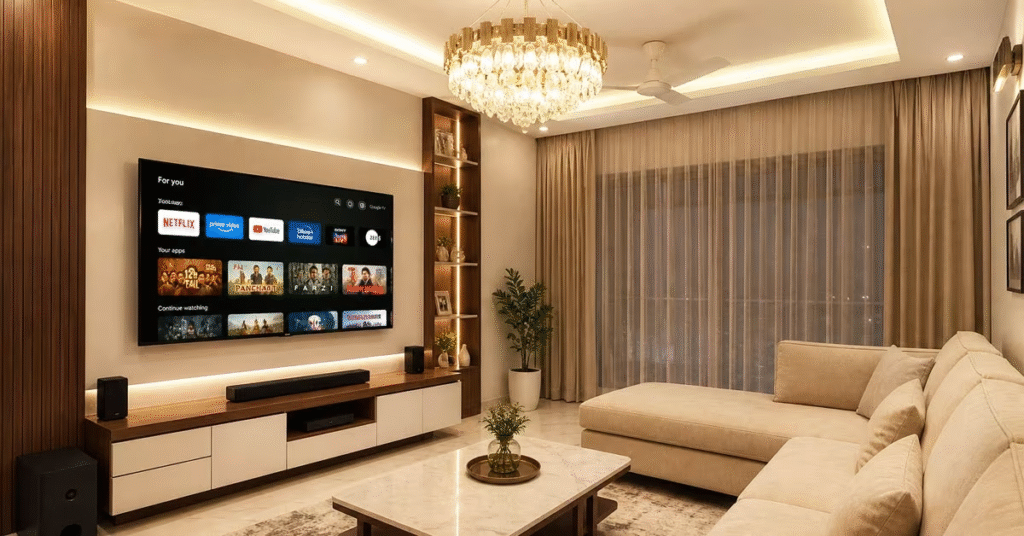
Your television screen serves as the primary window through which entire alternate universes open up before you. However, staring at an oversaturated, glaring screen can feel as unnatural as staring straight into harsh neon lights at midnight. The top displays of 2026 focus heavily on organic color reproduction, deep shadows that mimic twilight, and balanced highlights that capture the true, gentle brilliance of open sunlight.
Mini-LED versus OLED: The Balance of Light and Shadow
When evaluating top-tier displays this year, the market is rooted in a fascinating balance between advanced OLED panels and ultra-bright Mini-LED architectures:
- OLED Displays: Think of an OLED panel as a deep, moonless night in the countryside. Because every single pixel can turn completely off independently, blacks are absolute and pitch-dark. This allows stars, campfires, and bright cinematic highlights to pop with breathtaking, natural contrast that never strains your eyes.
- Mini-LED Displays: Think of Mini-LED technology as a dense forest pierced by bright shafts of high-noon sunlight. These displays achieve blazing brightness levels that comfortably illuminate a sun-drenched living room without washing out the vivid greens, deep blues, and warm earth tones of the video on screen.
Human-Centric Processing and Calibration
Gone are the days when you had to spend hours manually digging through menus to tweak color temperatures, gamma curves, and backlight settings just to get a picture that looked right. Modern video processors utilize intelligent algorithms to study the ambient natural light in your room—much like a houseplant adjusting its leaves to track the sun—and automatically calibrate the display’s warmth and brightness to match the time of day. Daytime viewing remains crisp and grounded, while evening viewing softens into a warm, cinematic twilight that welcomes relaxation.
Interactive Ecosystems: Gaming and Streaming in Harmony

Entertainment is no longer a rigid, one-way street; it has transformed into an active, responsive dialogue. Whether you are picking up a controller to explore a sprawling digital wilderness or streaming an interactive narrative series, your hardware needs to respond with the fluid, effortless grace of a wild animal darting through brush.
High Refresh Rates and Seamless Motion
Stuttering motion on a screen breaks your psychological immersion instantly—it serves as the digital equivalent of a jarring, discordant noise interrupting a peaceful walk in the woods. The top-performing entertainment displays and gaming hubs of 2026 feature lightning-fast refresh rates, ranging from smooth 120Hz up to butter-smooth 165Hz panels.
When you pan across a panoramic digital landscape, the trees, mountains, and rivers glide past your eyes with organic fluidity. Advanced Variable Refresh Rate (VRR) technology ensures that your gaming hardware and display communicate in seamless harmony, entirely eliminating screen tearing and keeping your interactive adventures feeling grounded and natural.
Choosing Your Home Entertainment Gear
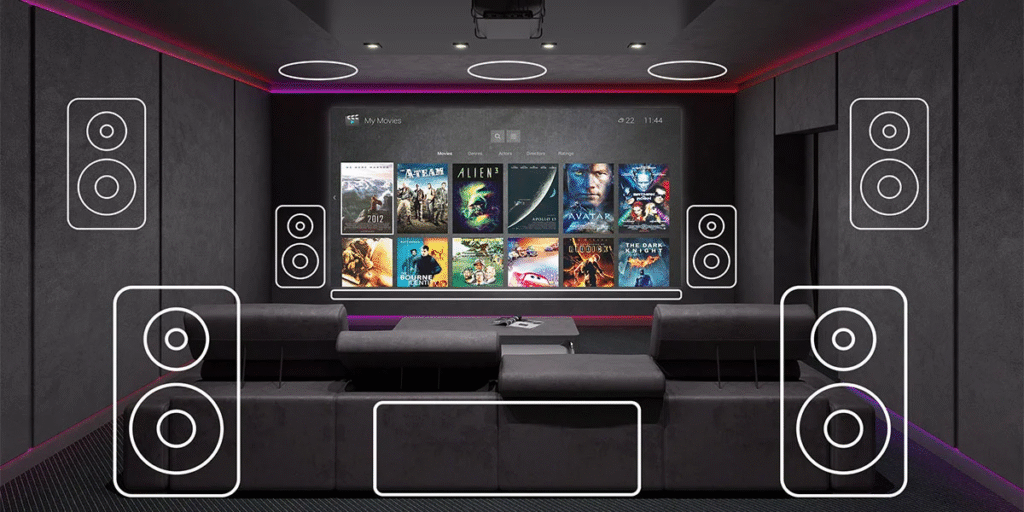
Stepping into the electronics marketplace without a clear, personal compass is a recipe for overwhelming decision fatigue. To help you cultivate an ideal entertainment space tailored specifically to your unique human rhythms, follow this reassuring, step-by-step evaluation :
- 1. Map Your Environment’s Natural Light: Observe how sunlight enters your living space throughout the different hours of the day. If your room is regularly flooded with bright daylight, prioritize a high-brightness Mini-LED display. If you mostly watch films in a cozy, dim basement or strictly after sundown, an OLED panel’s deep, shadowy contrast will serve your eyes best.
- 2. Assess Your Acoustic Ecosystem: Consider your home layout and the people who share space with you. If you live in an apartment or close quarters, invest in a quality soundbar equipped with clear dialogue enhancement and dedicated night modes rather than a heavy, ground-shaking subwoofer that rattles your neighbors’ walls.
- 3. Streamline Your Control Interfaces: Avoid the daily frustration of juggling four or five different remote controls. Look for unified smart TV ecosystems that allow you to access all your streaming channels and media sources from a single, intuitive interface.
- 4. Prioritize Ergonomics and Physical Comfort: Whether you are shopping for a pair of long-wearing noise-cancelling headphones or an ergonomic couch for movie marathons, ensure physical comfort comes first. Great technology is entirely useless if it pinches your ears or strains your neck after twenty minutes of use.
FAQ’s
1. What are the best home entertainment products to consider in 2026?
Popular categories include smart TVs, soundbars, speakers, streaming devices, projectors, and home theater accessories.
2. What should I look for when buying a smart TV?
Consider screen size, display quality, resolution, refresh rate, operating system, connectivity, and available smart features.
3. Is a soundbar worth buying for a home entertainment setup?
A soundbar can provide a more immersive and clearer audio experience than many built-in TV speakers.
4. How do I choose the right home entertainment product?
Compare features, performance, compatibility, price, warranty, user needs, and available space before buying.
5. Are expensive entertainment products always better?
Not necessarily. The right choice depends on your requirements, features, performance, and budget rather than price alone.